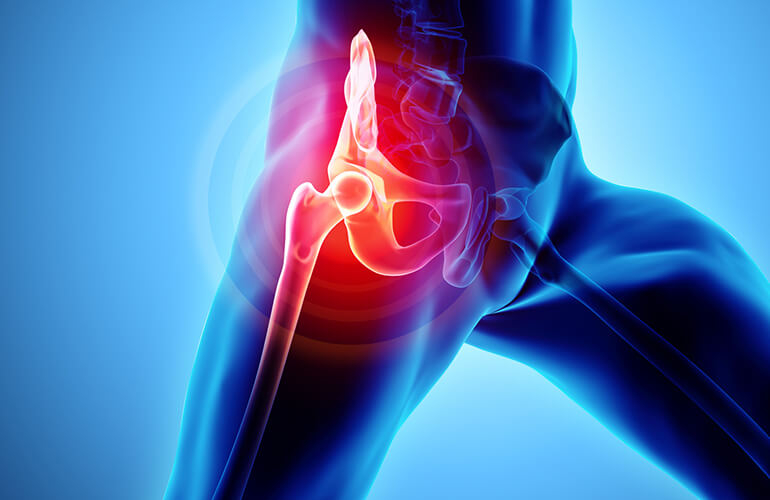
Avascular Necrosis (AVN) is the death of bone tissue due to the lack of blood supply. It is also known as osteonecrosis or Bone infarction. This disease generally affects people between the age of 30 and 50. In the early stages, there might be no symptom of this disease, but gradually pain may develop in one or more joint of the body, restricting the ability to move. Common causes of AVN include bone fractures, high intake of alcohol and high dosages of steroids. Other risk factors may include chemotherapy, radiation therapy and organ transplant. Also, it is often associated with cancer, sickle cell disease, lupus, HIV infection, Gaucher’s disease or Caisson disease. However, it may develop sometimes without any clear reason.
Symptoms
There is no clear sign of this disease at the initial stage, but the affected person may experience pain or discomfort in moving or walking, which increases gradually with time. Additionally, it is often seen that AVN affects more than one part of the body at once. Typically, AVN affects the ends of the long bones of our body, such as the femur. Other common sites of damage include the humerus, knees, shoulder, jaw and the ankle.
Treatment
Various methods are used to cure AVN, Total Hip Replacement (THR) being the most common one. However, THR is said to possess numerous threats. It might be dangerous for elderly people as it may lead to dislocations, blood seepage and various other complications.
The ancient ways of Ayurveda can treat AVN without any surgery. Ayurveda helps to restore blood supply to the bone tissue using various ayurveda techniques. Once the blood supply is restored the bone automatically starts to heal in a natural way thus treating AVN without any surgery.